Field of mechanics and micromechanics

Some commonly used norms and standards

Here are some details extracted from norms and standards which may require FEM type analyses in the structural (vibrational, shock analyses) and thermal domains.

UN 38.3

"Recommendations for the Transport of Dangerous Goods: Manual of Tests and Criteria, Sixth Revised Edition, Section 38.3: Lithium Metal and Lithium Ion Batteries"

Shocks and vibrations

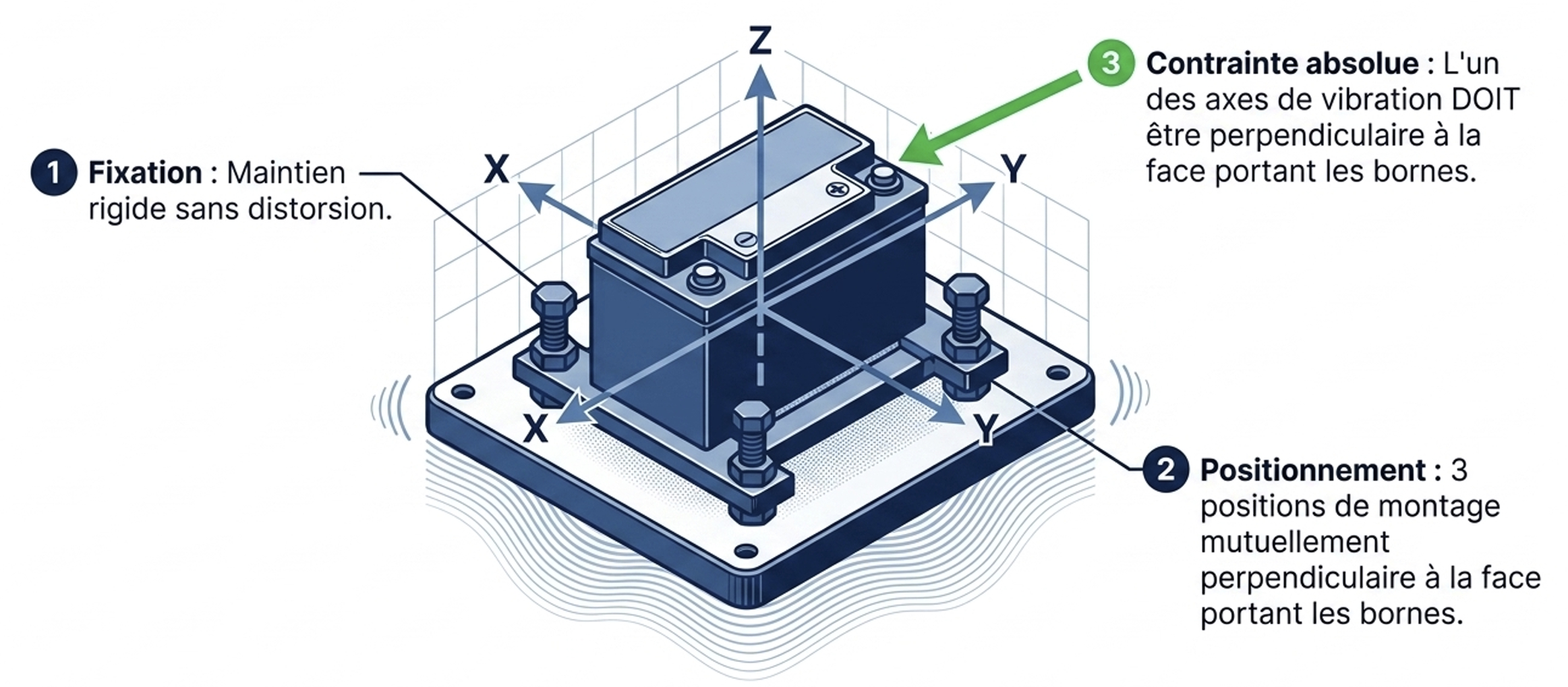
This standard specifies, in particular, the sinusoidal vibration (harmonic) and shock conditions that the devices must withstand. The passing criteria are listed specifically for each required test.

Thermal

The standard also specifies an "extreme" thermal cycle that the battery must endure, with minimum and maximum temperatures, exposure times, and transition speeds.


norme UN 38.3


UL 2271

The UL 2271 standard is the reference safety standard for batteries in light electric vehicles, such as electric bicycles, scooters, golf carts and ATVs.

"Standard for Batteries for Use In Light Electric Vehicle (LEV) "

Shocks and vibrations

This standard specifies resistance to impact, drops, vibration, crushing, and overturning. Regarding vibration, the standard specifies random vibration conditions over a long period.

Thermal

At the thermal level, UL 2271 imposes constraints during exposure to fire and thermal cycles (rapid transition from cold to hot).


EN 61373

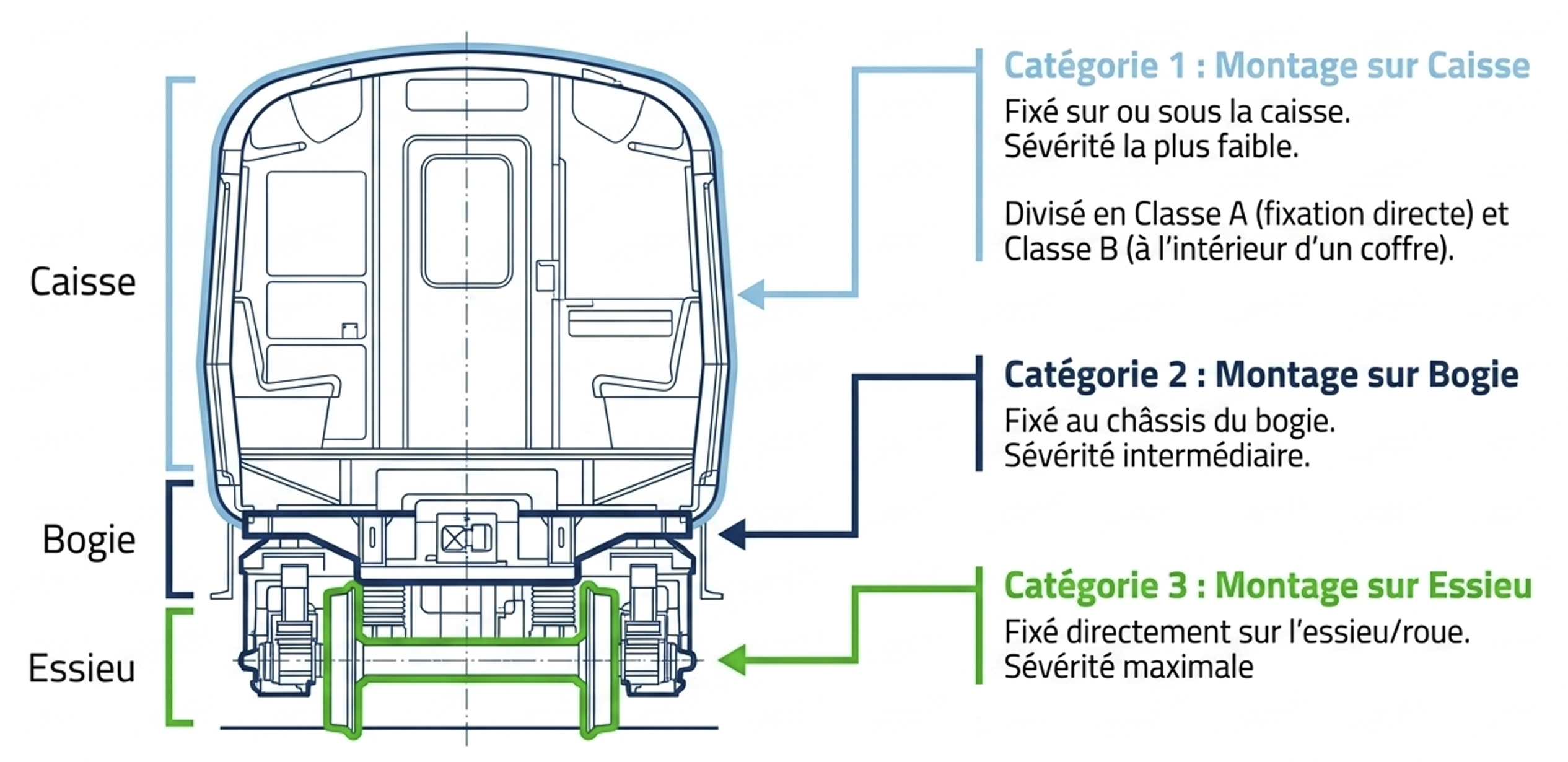
The EN 61373 (or IEC 61373) standard specifies the shock and vibration test requirements for equipment intended for railway vehicles. It guarantees the resistance of components (mechanical, electrical, electronic) to random vibrations and shocks, simulating service life.

"Railway applications – Rolling stock equipment – Shock and vibration tests."

Shocks and vibrations

Severity levels depend on the equipment's location on the train, according to three categories:
- Category 1: Equipment mounted on the vehicle body (inside or under the chassis)
- Category 2: Equipment mounted on the bogie
- Category 3: Equipment mounted on the axles

The standard specifies three types of tests to be performed:
- Functional random vibration: Verification that the equipment functions correctly under low, constant vibration.
- Long-term simulated random vibration: Accelerated endurance test to simulate years of service.
- Shock tests: Simulation of sudden jolts (emergency braking, passing over switches).


norme EN 61373


MIL-STD-810H

This American military standard is designed to assess the resistance and durability of equipment to environmental stresses throughout its life cycle.

"Environmental Engineering Considerations and Laboratory Tests"

Shocks and vibrations

Method 514.8 of this standard defines the procedures for evaluating a piece of equipment's ability to withstand vibrations encountered during transport or operational use. It is divided into several procedures and categories adapted to the specific product lifecycle.

There are three types of simulated vibrations:
- Random: Represents the majority of real-world vibrations (road, wind).
- Sine Sweep: Used to identify critical resonance frequencies that could destroy internal components.
- Gunfire: Brief but extremely intense vibrations.

Method 516.8 of the standard deals with mechanical shocks. Its purpose is to verify that the equipment can withstand the sudden shocks encountered during handling, transport or incidents (such as a fall), without structural damage or malfunction.

Thermal

Temperature is one of the central pillars of the MIL-STD-810H standard. It is addressed through three distinct methods depending on the nature of the exposure (heat, cold, or thermal shock).




Adresse:
SIMeka Sàrl
Av. Edouard-Dapples 40
CH-1006 Lausanne


© 2025/2026 - SIMeka Sàrl - Legal notice


EN | FR